
Financing is one of the three major decisions in financial management, the other two being investment and asset management decisions. The financing decision involves determining the makeup of the right-hand side of the balance sheet. Different firms across industries employ varying types and amounts of financing. The financial manager must figure out how best to acquire the necessary funds, such as obtaining short-term loans, entering into long-term lease arrangements, or negotiating the sale of bonds or stock. The dividend policy decision is also closely linked to the decision to invest and finance.
Here are some formulas that are commonly used in financing decision making:
Debt-to-Equity Ratio: Debt-to-equity ratio is a measure of a company’s financial leverage. It is calculated by dividing the total liabilities by the total equity. The formula for debt-to-equity ratio is:

Interest Coverage Ratio: Interest coverage ratio is a measure of a company’s ability to pay interest on its outstanding debt. It is calculated by dividing the earnings before interest and taxes (EBIT) by the interest expense. The formula for interest coverage ratio is:

Debt Service Coverage Ratio: Debt service coverage ratio is a measure of a company’s ability to meet its debt obligations. It is calculated by dividing the net operating income by the total debt service. The formula for debt service coverage ratio is:

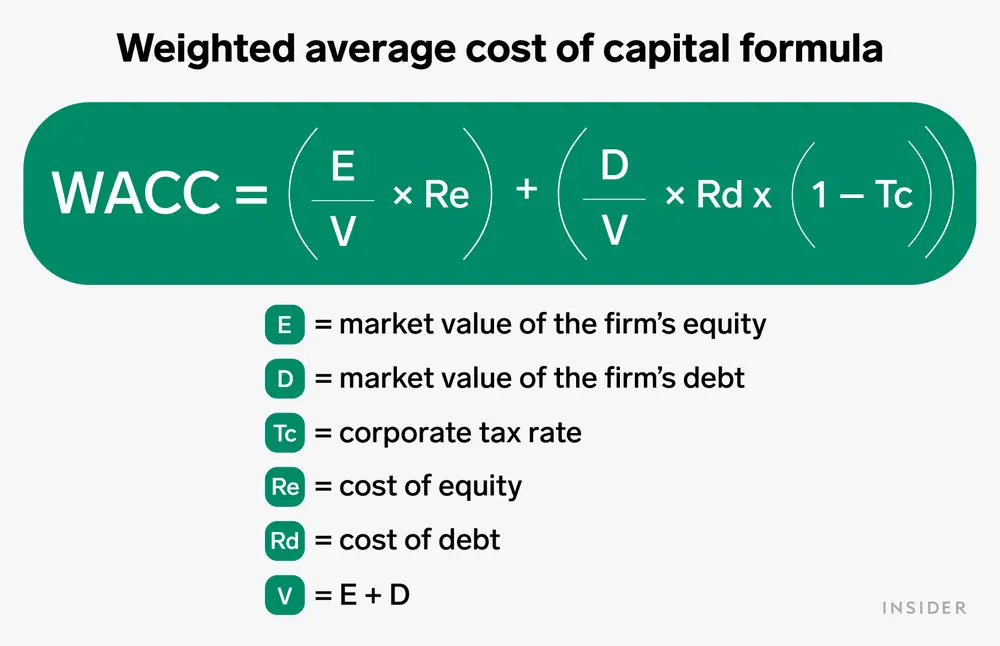
Weighted Average Cost of Capital (WACC): WACC is a measure of a company’s cost of capital. It is calculated by multiplying the cost of each capital component by its proportional weight and then summing the results. The formula for WACC is:
 ABC of Finance
One thought on “Financing Decisions”