
Assets are the economic resources that belong to or are controlled by a person, a business, or a country. Assets can provide future benefits, such as generating income, reducing costs, or increasing value. Assets can be classified based on different criteria, such as their convertibility into cash, their physical existence, and their usage or purpose.
Convertibility
One way to classify assets is based on how easily they can be converted into cash or cash equivalents. Cash equivalents are short-term, highly liquid investments that can be readily exchanged for cash. Based on this criterion, assets can be divided into two categories: current assets and non-current assets.
Current Assets

Current assets are assets that can be quickly converted into cash or cash equivalents within one year or less. Current assets are also called liquid assets because they can be easily sold, transferred, or exchanged. Examples of current assets are:
- Cash
- Cash equivalents
- Short-term deposits
- Accounts receivable
- Inventory
- Prepaid expenses
Non-Current Assets
Non-current assets are assets that cannot be easily converted into cash or cash equivalents within one year or more. Non-current assets are also called fixed assets or long-term assets because they are usually held for a long period of time. Examples of non-current assets are:
- Land
- Building
- Machinery
- Equipment
- Patents
- Trademarks
Physical Existence
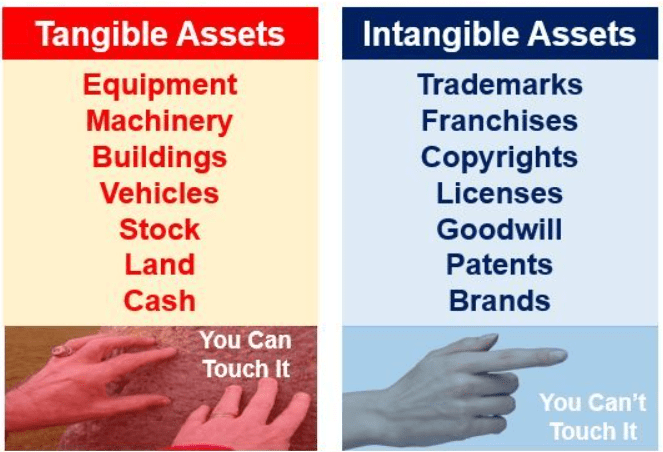
Another way to classify assets is based on their physical existence, or whether they can be seen or touched. Based on this criterion, assets can be divided into two categories: tangible assets and intangible assets.
Tangible Assets
Tangible assets are assets that have physical existence and can be seen or touched. Tangible assets are usually recorded on the balance sheet at their historical cost, which is the original cost of acquiring them. However, some tangible assets may lose value over time due to wear and tear, obsolescence, or impairment. This loss of value is called depreciation or amortization. Examples of tangible assets are:
- Land
- Building
- Machinery
- Equipment
- Vehicles
- Furniture
- Inventory
Intangible Assets
Intangible assets are assets that do not have physical existence and cannot be seen or touched. Intangible assets are usually recorded on the balance sheet at their fair value, which is the amount that a willing buyer would pay to a willing seller. However, some intangible assets may lose value over time due to changes in market conditions, legal rights, or competitive advantages. This loss of value is called impairment. Examples of intangible assets are:
- Patents
- Trademarks
- Goodwill
- Brand name
- Customer loyalty
- Licenses
Usage or Purpose
A third way to classify assets is based on their usage or purpose, or how they are used to generate income or value for the owner. Based on this criterion, assets can be divided into two categories: operating assets and non-operating assets.
Operating Assets
Operating assets are assets that are used to produce goods or services that are the main source of revenue for the owner. Operating assets are also called core assets or strategic assets because they are essential for the operation and growth of the business. Examples of operating assets are:
- Inventory
- Machinery
- Equipment
- Patents
- Trademarks
- Accounts receivable
Non-Operating Assets
Non-operating assets are assets that are not used to produce goods or services that are the main source of revenue for the owner. Non-operating assets are also called non-core assets or peripheral assets because they are not essential for the operation and growth of the business. Examples of non-operating assets are:
- Cash
- Cash equivalents
- Short-term deposits
- Marketable securities
- Land
- Building
 ABC of Finance