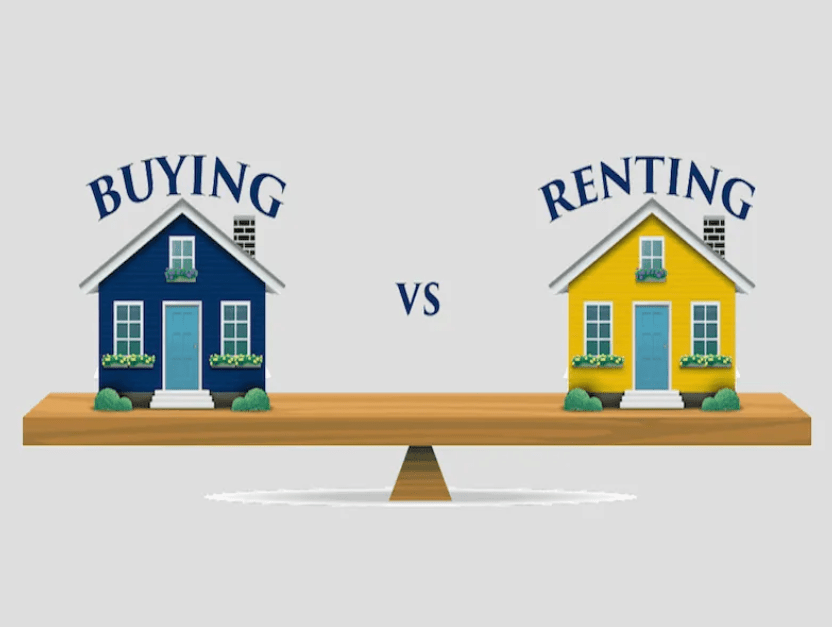
If you’re thinking about moving to a new place, one of the biggest decisions you’ll have to make is whether to rent or buy a house. Both options have their pros and cons, and the best choice for you depends on your personal and financial situation.
In this blog post, we’ll compare the costs, benefits, and drawbacks of renting and buying a house, and help you weigh some of the key factors that affect your decision.
Costs of Renting and Buying
Renting and buying a house both involve upfront and recurring costs. Here are some of the main expenses you’ll have to consider:
- Upfront Costs: These are the costs you pay before or at the time of moving in. For renters, these may include a security deposit, the first month’s rent, a pet deposit, and moving costs. For buyers, these may include a down payment, closing costs, appraisal and inspection fees, property taxes, homeowners insurance, and moving costs.
- Recurring Costs: These are the costs you pay on a regular or ongoing basis. For renters, these may include rent, pet rent, renters insurance, utilities, and laundry costs. For buyers, these may include mortgage payments, property taxes, homeowners insurance, private mortgage insurance, homeowners association fees, utilities, and maintenance costs.
- One-Off Costs: These are the costs that may arise occasionally or unexpectedly. For renters, these may include rent increases, lease termination fees, or relocation costs. For buyers, these may include home repairs, home improvements, or selling costs.
Benefits of Renting and Buying
Renting and buying a house both have some advantages that may appeal to you depending on your goals and preferences. Here are some of the benefits of each option:
- Renting: Renting gives you more flexibility, as you can move easily when your lease ends. It also gives you more predictability, as you know your housing costs each month and don’t have to worry about maintenance or repair costs. Renting may also be cheaper than buying in some markets, especially if you don’t plan to stay for a long time.
- Buying: Buying a house gives you the opportunity to build equity and wealth over time, as you pay down your mortgage and your home appreciates in value. It also gives you tax benefits, such as deducting your property taxes and mortgage interest. Buying a house also gives you more control and stability, as you can customize your home to your liking and don’t have to deal with rent increases or eviction.
Factors to Consider When Renting or Buying
There is no one-size-fits-all answer to whether renting or buying a house is better for you. The best decision depends on a number of factors, such as:
- Your Financial Situation: You need to assess your income, savings, credit score, debt, and budget to determine how much you can afford to spend on housing. You also need to consider the opportunity cost of your money, which is what you could earn by investing it elsewhere instead of putting it toward a down payment or rent.
- Your Lifestyle and Goals: You need to think about your personal and professional plans, such as how long you intend to stay in the area, whether you want to start a family, whether you need a lot of space or amenities, and whether you enjoy DIY projects or prefer convenience.
- Your Local Market Conditions: You need to research the housing market in your desired location, such as the average rent and home prices, the rent-to-price ratio, the vacancy and inventory rates, the appreciation and depreciation trends, and the supply and demand factors.
Conclusion
Renting and buying a house are both viable options for different people in different situations. The key is to do your homework, weigh the pros and cons, and make an informed decision that suits your needs and goals. Remember that renting is not always throwing away money, and buying is not always building wealth. The best choice for you is the one that makes you happy and comfortable in your home.
 ABC of Finance